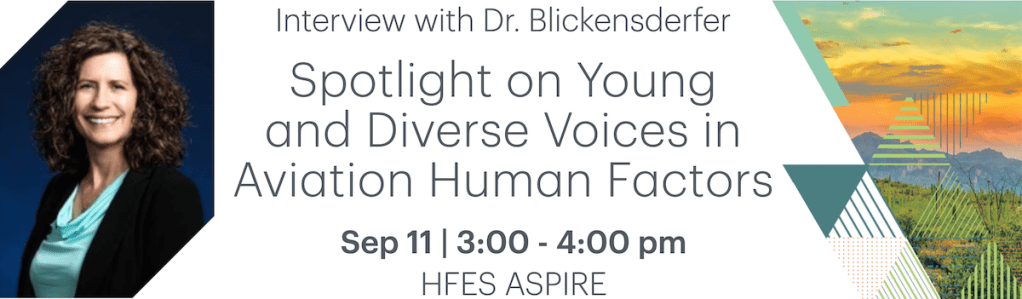
Aviation human factors professionals are crucial in designing and implementing aviation systems to enhance human experience, minimize errors, and maximize performance. But joining the industry can sometimes be challenging.
HFES ASPIRE will host a unique panel discussion on this topic. It will feature a diverse group of researchers and practitioners sharing their roles and experiences in aviation human factors. It aims to highlight the importance of diversity and inclusion within human factors and the larger aviation field, underscoring the benefits of incorporating a variety of perspectives. Additionally, the panel seeks to inspire the next generation of professionals by discussing opportunities and challenges in this dynamic field.
Dr. Beth Blickensderfer from Embry-Riddle will moderate this inspiring discussion and will share the stage with a great lineup of panelists, including: Bryan Gamelin from Honeywell Aerospace, Jayde King from the U.S. Air Force Research Laboratory, Vanesa Miksa from Boeing and Sabrina Woods from the National Transportation Safety Board.
Dr. Blickensderfer sat down for an interview with Katie Sabo and shared her perspectives on what to expect during the talk.
Breaking Barriers: A Spotlight on Young and Diverse Voices in Aviation Human Factors
Scheduled on Wednesday, September 11th, 3:00 – 4:00PM
ASTG. What topics do you plan to cover for your discussion panel?
Dr. Blickensderfer. The purpose of the panel is two-fold: To celebrate the diversity within the human factors aviation community and to encourage a new generation of human factors scientists to work in this dynamic domain. To accomplish this, we have an energetic, diverse set of panelists ready to discuss their roles, as well as the opportunities and challenges inherent to working in the field of aviation. Whether practitioners designing aviation systems, researchers conducting cutting-edge research, or aviation specialists in the federal government, these Human Factors scientists use their expertise to shape the future of aviation.
Why do you think this panel will be of interest to attendees?
While there are many outstanding Aviation HF professionals, these panelists can discuss how their unique backgrounds or perspectives contributed to advancements in aviation human factors, discuss any specific challenges or barriers they’ve encountered, and illustrate how diversity has positively influenced problem solving.
Who would be most interested in this discussion panel and what benefits do you think it will give them?
This session will be of interest to many conference attendees, regardless of your current domain. First, you can build your awareness of cutting-edge work in aviation. Second, the panelists’ perspectives on a domain undergoing a diversity transformation may give insights about building diversity in your own organization. Finally, for those considering career options, you can listen and learn about opportunities in the dynamic field of Aviation HF.
How much audience interaction would you like? What sorts of questions should attendees be thinking about?
Our priority will be audience participation. We know that conference attendees bring a lot of curiosity as well as experiences to share. Most of the session will be devoted to audience questions.
What do you hope attendees get from the panel?
I hope attendees will catch the panelists’ enthusiasm for Aviation Human Factors work.
What do you hope to get from participating in the panel?
I hope this panel propels the industry towards greater heights of inclusivity, innovation, and excellence.
The panel on young and diverse voices in aviation human factors will take place at HFES ASPIRE ’24 in Phoenix, AZ. Be sure to register to the conference to take part in the discussion and share your perspective on the subject.





 HFES Aerospace Systems
Leave a comment