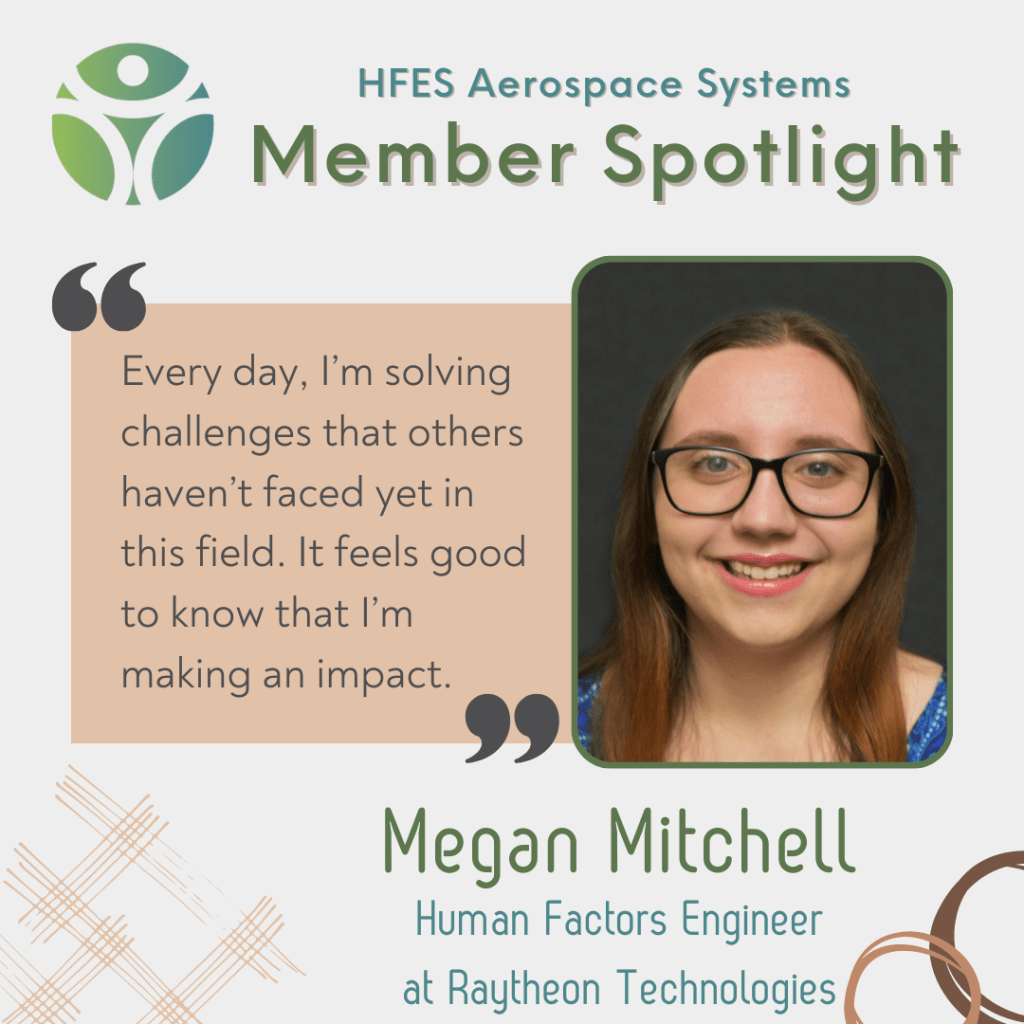
In this interview, Megan Mitchell, a human factors engineer at Raytheon Technologies, shares insights into her work on satellite ground stations. She discusses the unique challenges of designing interfaces for defense technology, the importance of user feedback from tech-savvy young operators, and how her team balances innovation with real-world needs. Megan also highlights the rewarding aspects of her role, from solving complex problems to making a meaningful impact. She offers advice for new graduates and talks about her passion for flying, mentorship opportunities, and the collaborative nature of her team.
Q: You are working to design the next generation of satellite ground stations. Could you tell me more about what they are and your role in their design?
Megan: I mainly work on satellite ground stations, which are used by satellite operators to control and manage the satellites and their tasks. My role involves creating the interface that these operators use, designing different types of controls, and even setting up their workstations. I’ve also worked on figuring out the manpower needed to operate the satellites—how many people it takes to run everything smoothly. These satellites are for the defense sector, so it’s important work.
Q: It’s good to hear you were able to involve satellite operators in the design. How do you engage with them?
Megan: We usually meet with one of the teams over Zoom. Sometimes I’ll go to the customer site for in-person meetings, but typically it’s virtual. During these meetings, we demo our system, and they give us feedback. A lot of it is focused on the data we display, as well as the controls and charts they want to see. One of the biggest requests we get is to make the displays more minimalistic. They’re often dealing with information overload, so it’s interesting to hear their perspective. And the operators doing this are usually around 18 years old! It’s really interesting because they’re super intelligent and knowledgeable—sometimes they know things our team isn’t even aware of. It’s humbling, honestly. These young adults are playing a big role in helping us develop this major engineering project.
Q: I would expect that designing for a younger, highly-specialized user base must come with its own challenges.
Megan: Right, you can easily tell they are from the video game generation. The thing that’s most interesting is how in tune they are with technology—they don’t need much guidance. Typically, in government systems, we’re required to create detailed technical and training manuals, and we spend hours going through every button and function. Then, at the end of each quarter, we walk them through the manual and explain how to use the system. But our operators are like, “We don’t need this—we know how to use websites, and we can figure out the buttons on our own.” It’s always kind of funny!
Q: What do you find the most exciting in your work?
Megan: There aren’t that many people who get to work on this kind of project, so it’s really cool knowing that every day, I’m solving challenges that others haven’t faced yet in this field. The work we’re doing has a real impact—it’s technology that’s going to make a difference. It feels good to know that you’re contributing to something meaningful and making an impact on the world.
Q: Moving from academic research to the industry can be a challenge. Could you tell us about your transition?
Megan: It was definitely a bit challenging at first. In industry, you have to accept that not everything will be perfect, and that was hard for me in the beginning. You also have to advocate for human factors and for yourself. But you do your best, and the work you do will make a difference and help in the long run. I’ve been lucky at Raytheon because they really value research. I’ve had the opportunity to publish papers, and Raytheon even has its own internal journal, which is published quarterly. That’s been exciting since not many places in industry emphasize research as much. With our team at Raytheon, we also have another publication coming out at AIAA/IEEE’s Digital Avionics Systems Conference 2024 on pilot workload while utilizing systems with auto-land capabilities. I am really excited to take part in his conference with my colleagues.
Raytheon also offers great mentorship opportunities. I’m part of the Human Systems Integration section at Raytheon, which has about 17 people, and it’s a really great team. Within our group, there are a few people who have been identified as mentors. If you’re working on a project and have questions, you can always go to them for help. Additionally, the company holds monthly mentoring sessions—People bring up different topics, and we discuss them as a group. Colleagues are always looking for new learning opportunities, either to teach us or for the team to explore. It’s a really supportive community, and within our section, everyone backs each other up. Even though we all have our own roles and projects, the team makes sure to support one another, which has been really nice.
Q: Any advice for new graduates who want to join the aerospace or aviation fields?
Megan: I’d say, make sure it’s something you love. That passion really stands out. If you’re excited about planes or satellites, employers notice that, and they want people who are genuinely interested. Learn as much as you can, and realize that you’re new—you will make mistakes, and that’s okay. Your company will know that too. What they’re really looking for is your ability to adapt, learn from those mistakes, and improve.
Q:I hear you work a lot and you really love your job. Can you tell me about your other hobbies?
Megan: I really enjoy flying! I try to go every couple of weeks. I do general aviation flying in a Cessna 172. There are a lot of fun airports around California that I love hopping between. It’s always a great time.








 HFES Aerospace Systems
Leave a comment