The inaugural HFES Aerospace Technical Group webinar occurred on Nov 6, 2024 . You can watch the video recording above. We also prepared a written summary with the main highlights of the discussion.
Speakers: James C. Cunningham, Kamryn N. Koesters, and Patrick Paganelli-Mulvany from the US Air Force Agility Prime.
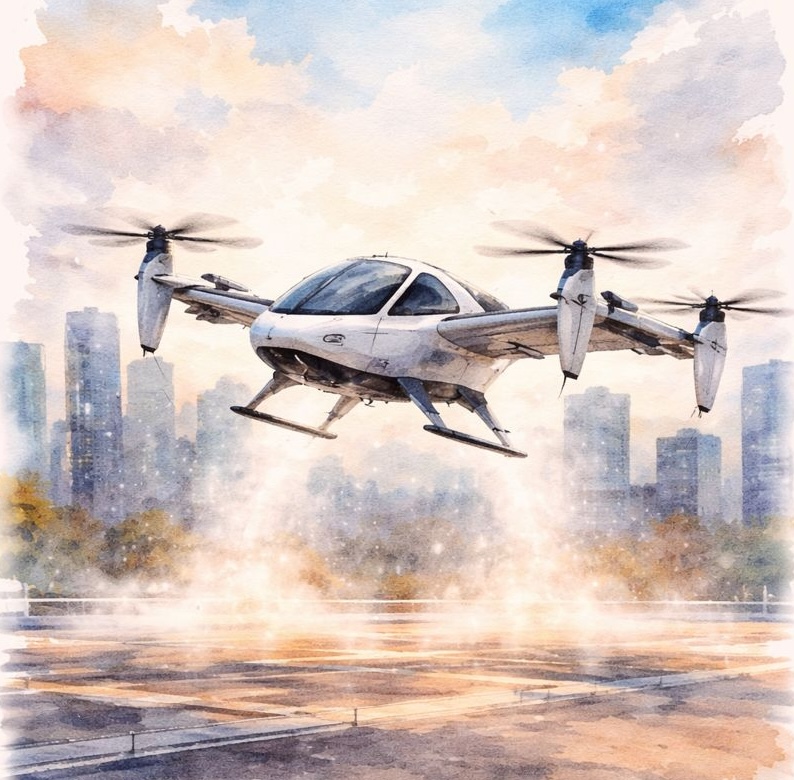
Electric Vertical Takeoff and Landing (eVTOL) aircraft are on the verge of transforming not only commercial air travel but also military operations. In a recent webinar hosted by the Human Factors and Ergonomics Society (HFES – ASTG), three engineers from the Agility Prime initiative—a U.S. Air Force program designed to explore the viability of eVTOLs for defense applications—shed light on how this technology is being adapted for military use. Based out of Edwards Air Force Base, the engineers shared the unique challenges, technological advances, and human factors considerations that have shaped their approach to eVTOL testing and integration.
Lieutenant Kamryn N. Koesters started by highlighting the Agility Prime initiative’s broad mission. Unlike traditional government acquisition cycles, which often require years to identify and field solutions, Agility Prime seeks to fast-track innovative technologies that could meet critical military needs. Koesters explained that the goal is to develop a “platform-agnostic” environment that supports multiple eVTOL aircraft types, with data gathered from initial trials serving as a foundation for military applications. Agility Prime, in this way, operates not as a typical program of record but rather as a bridge, evaluating promising technologies before a formal acquisition process is initiated.
One of the first major tasks for the Agility Prime team was creating the infrastructure needed to test and support eVTOLs at Edwards Air Force Base, especially how to integrate eVTOLs in the airspace. This was all before the more recent FAA guidance on eVTOL and they had to come up with their local solutions. The team described their collaboration with Joby Aviation, one of the main contractors. In accommodating Joby’s eVTOL aircraft, the team faced logistical challenges, such as finding safe methods to store, charge, and operate electric aircraft in a military environment. For instance, they had to innovate solutions for charging the aircraft inside a hangar by managing airflow and establishing battery recharge protocols—along with draining oil from the historic aircraft in the hangar to protect assets. They also came up with a surprising two-way “discharging” infrastructure to put power back into the grid, as battery life is prolonged when kept at a certain percent of charge. As Koesters noted, these precedents not only help Agility Prime but also set standards for future military or civilian eVTOL operations.
A central focus of Agility Prime is integrating eVTOLs into real-world military missions. They are currently investigating four key aspects through extensive on-the-field testing:
- Personnel and equipment transportation
- Base perimeter surveillance and asset inspection in remote areas
- Flight path evaluation in normal vs. contested airspace, especially the impact on battery usage
- Maintenance and reliability of this new aircraft category
Edwards Air Force Base, known for its extensive desert environment, offers unique opportunities for testing eVTOLs in large, open spaces. A major challenge they face in daily operation is moving around the base, and eVTOLs have shown advantages when compared to ground vehicles. Responding to medical emergencies is also a major use case, by being able to offer faster life support and evacuate wounded personnel to safe areas. Lieutenant shared an instance where having been able to evacuate a person faster could have made the difference in her survival. The same lesson applies to rural communities with limited access to emergency healthcare. Even though Edwards is in the Californian dessert, flooding can be a major problem. Rapid air evacuation by eVTOLs – since roads are unserviceable – would be a major advantage. Although all of this can be done by helicopters, their operating costs of $2,000/hr make it prohibitive. Costs for eVTOLs are rapidly decreasing and we can expect in the near future to reach a travel fare similar to that of an Uber ride.
Finally, the team expressed their optimism about the future impact of eVTOLs beyond the military sphere. While Agility Prime is a defense-led initiative, they believe the insights gained from their testing will have applications in civilian sectors, particularly in emergency response and logistics for rural or hard-to-access areas.
Early in the presentation, Koesters shared growing up watching Star Wars and how much it influenced her vision for the future of transportation, with aircraft zipping through skyscrapers and people hopping on and off vehicles from the top of buildings. Reflecting on her role in Agility Prime, Koesters said feeling honored for being a part in making that future vision a reality.
And so are we! A big thank you to the entire team at Agility Prime for having shared their progress on the future of eVTOLs in military operations.






 HFES Aerospace Systems
Leave a comment