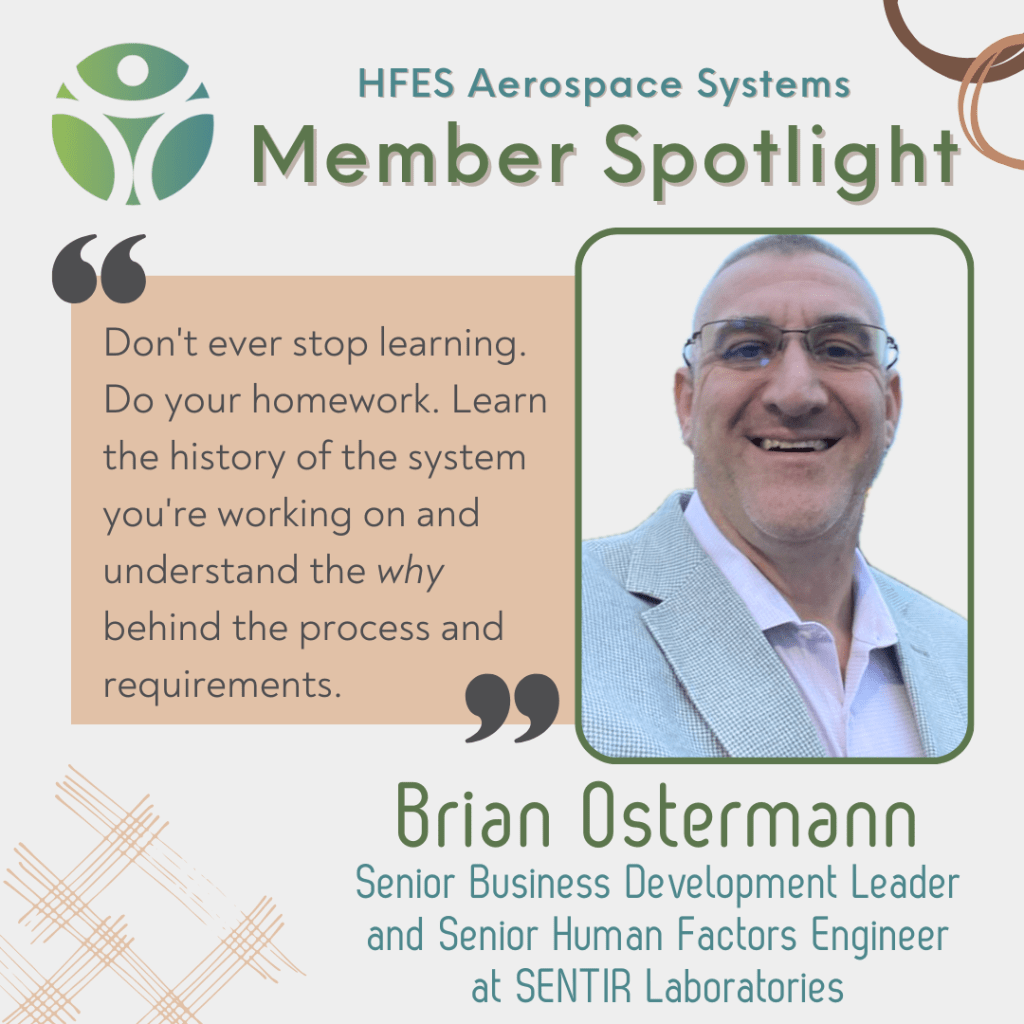
Brian Ostermann, Senior Business Development Leader and Senior Human Factors Engineer at SENTIR Laboratories, has built a dynamic career blending human factors expertise with business development. At SENTIR, he initially contributed to a high-impact Air Force project, completing it ahead of schedule and delivering actionable insights to decision-makers. Transitioning to business development, Brian emphasizes networking, understanding client needs, and leveraging SENTIR’s capabilities to solve industry challenges. His diverse background, from serving as a flight engineer in the Air Force to studying human factors, informs his approach to fostering collaboration and innovation. Brian’s passion for aviation, coupled with his adaptability, continues to drive his efforts to bridge technical expertise with strategic growth opportunities.
— By Katie Sabo
I’d love to hear more about your work.
The company I currently work for is the Solution for Engineering New Technology and Innovative Research (SENTIR) Laboratories. We’re a division of Solutions for Innovative Technologies (STI-Tec). I was initially hired in December of ‘20 as a Senior Human Factors Engineer for a specific project supporting the Air Force that lasted a year and a half. We were supposed to be a 36-month project, and we completed it in 18 months. There’s good to that because the information went straight to the leadership and the decision-makers, and some significant changes happened. That was very rewarding and very good because sometimes things just get placed in a drawer someplace.
When that project ended, and my boss asked if I would consider moving into business development, I said yes – it was a new opportunity and new skill sets to learn. A lot of those skills from human factors work carry forward. I see this conversation also as business development. We’re talking shop, and every opportunity I get to talk human factors is a plus for me. I enjoy the subject and the topic, and then, at the same time, mentor and network.
How did you find jumping from the hands-on human factors world to more of a management role on the business development side?
If you think about it, everyone is a manager; you may not have the word manager in your job title, but everyone is a manager. Most of my adult life was in the Air Force, so the transition and acceptance of responsibilities have always been there and have carried forward into the afterlife into my civilian career.
I find my part of business development is networking, making friends, looking for opportunities, and working with my leadership to see what our current capabilities are and how they are changing. And then, how can we help potential partners or others, whether it be a government agency or a commercial vendor – “Hey, what do you need? How can we help you based on our capabilities?”
What was your path to your current role?
Looking back, it was a case of air sickness during flight engineer flight school. When I initially started flying in flight school, I started getting airsick. 99.9% of the time, when you get airsick or seasick, it’s psychological unless you have a proven physical deformity inside your inner gyros. You get airsick long before you get on the airplane. When I went on to grad school to do my human factor studies, I actually did a paper on airsickness. It’s similar to a boxer puking in the garbage can before a fight or a pro football player puking on the sidelines before the game. It’s no different.
When I started, I was aircrew. I was an Air Force Flight Engineer, primarily on helicopters. I was originally a mechanic on big aircraft, and then I cross-trained into a different career field to be a flyer, a flight engineer, and that route took me to helicopters. And so a little more than half my career in the Air Force was flying helicopters. That was a blast. Then I retired in March of 2011, and that transition was interesting. I went from the military to the civilian community, trying to find my legs and trying to find where I fit. My first job out of the military was overseeing the day-to-day operations of a small municipal airport. Even though I was exposed to human factors, it wasn’t really presented as human factors – crew, resource management within aircrew – it’s very embedded and always beat into you. You embrace it, and when it works, it’s like music. It’s a culture, an ideology.
I started seeing various pilots in general aviation making some questionable decisions. I thought that was concerning. It woke me up because the military – Air Force, Army, Navy, and Marines – is a bubble you work in. There’s a process and procedure for everything. The civilian community is a little more open. I had to learn that. There was a helicopter emergency medical service station at the airport where I was working. I saw two different cultures: pilots with a military background believed in the crew concept of where they took their flight nurses and medics and brought them into the flight operations. They’d say, “Hey, when we’re on final approach, watch that vehicle there. Look at that tree. Are there any poles in the way as we’re coming in on the approach? Make sure our tail is clear. Look at this gauge for me; tell me if this exceeds this number. What’s your status with the patient in the back?” Pilots who weren’t used to a crew concept and didn’t have that military background made a distinct delineation: “I’m the pilot in the front; you’re the people in the back. Let me do my pilot thing. You do your nurse thing, and that’s it.” That’s an accident waiting to happen. So that was interesting to learn.
But I didn’t do that job long. That was about ten months. Then another opportunity came for me to start flying again: I was a contractor for the Department of State and flying for them. And that was interesting because I had to learn different languages. I had to learn the language of the Department of State flying program, which based its flying program on the Army’s flying program. So, I had to learn the Army language of flying. And then one of the aircraft we were opersating was coming from the Marine Corps, and so many of those aircrew coming in were prior Marines, so I had to learn Marine language, and so there’s a lot of human factors in there. As an aircrew instructor, working with people from various backgrounds and making a military aircraft fit into a civilian environment. This was one of the best experiences in my career – so many positive influences and new perspectives on flying operations and aviation gained.
I also carried a lot of old injuries that were starting to catch up to me from my military days. At some point, you gotta stop. So I went back to school. When I was working at the airport, a letter from the Florida Institute of Technology was being distributed, and they said they were offering a new program called Human Factors in Aeronautics online. That opportunity stayed in my head when I was flying; that’s when I went back to school and started working on my grad program. My undergraduate degree is actually in Homeland Security with a concentration in Transportation Security. That’s a lot of risk management and understanding threats, which has quite a bit of carry-over to human perception, risk mitigation, and decision-making within human factors.
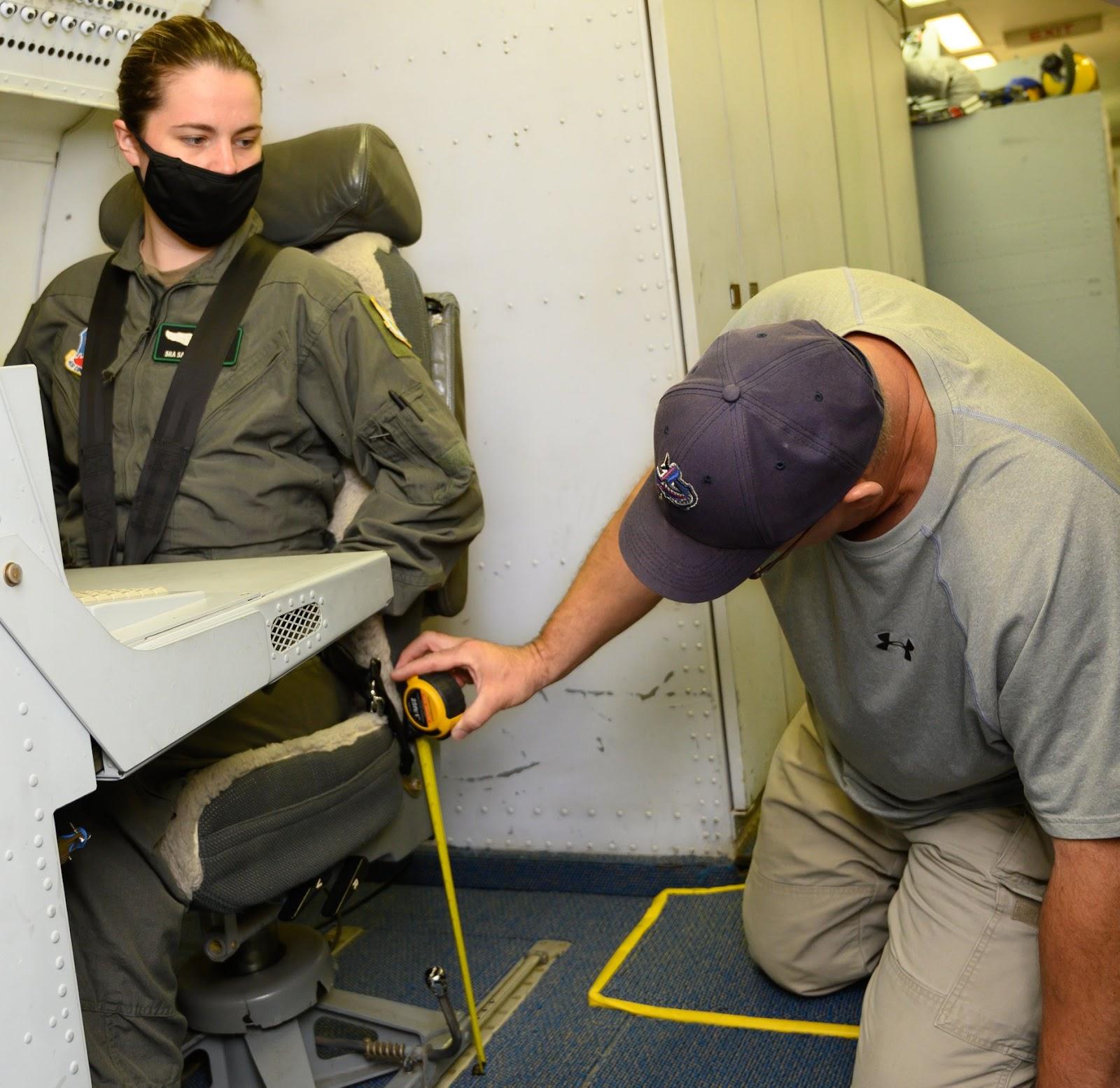
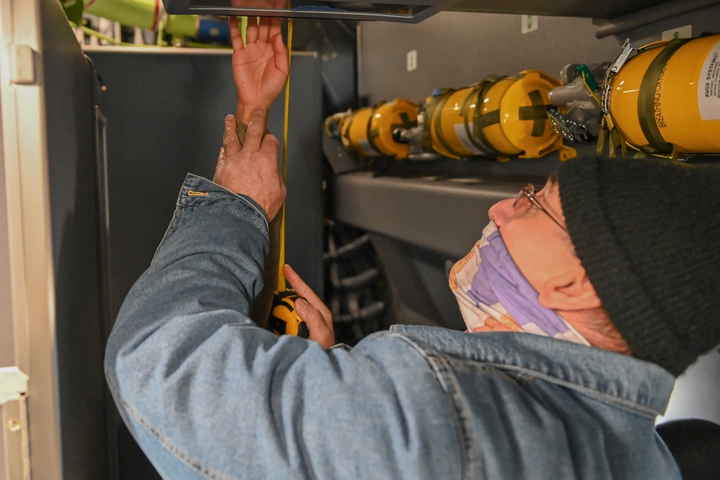
Then, I worked as a human factors developmental test engineer contractor representing the Air Force for the new combat rescue helicopter, the HH-60W, program from 2015 through the end of 2020. When that program ended, an opportunity with the USAF Airmen Accommodation Lab out of Wright Patterson Air Force Base as a contractor opened up. I hired on to support a program called Career Enlisted Aviator Anthropometric Study. The study evaluated ten Air Force Specialty Codes amongst 32 aircraft and 15k aviators. Long story short, a number of years ago, the Air Force pilot community got rid of their height and weight standards to be able to sit in the cockpit, but the enlisted aviator community based all their standards on the pilots’. So, what could the enlisted community do? They had no standards now. So we went back and we assessed. I’m not a mechanical engineer; I’m prior crew. So, I know the language, I know human factors, and I know task analysis and perception. We measured all the different populations and interviewed every specialty code for a particular aircraft. We expanded the envelope to the number of people who can now access and operate the aircraft and perform the job safely. No longer is there a “one size fits all” standard of 64-77 inches in stature, which was found to eliminate 43% of US females between 1967 and 2023. That program ended, but I still advise and help out where I can in human factors. Now, I do business development.
What does a typical day look like for you on that business developer end, and how is that different from what it looked like when you were more of a human factors engineer?
I open up my computer, and I review requests for information from organizations performing market research and review proposal requests. I do interviews like the one we’re having. I connect with other companies, people in business development, and people I used to work with, and I seek ways to help them. “Hey, how can we help you? What do you need?” One of our divisions is the Accommodation Research Center, which houses the Air Force, government people, and government equipment. Another division under SENTIR performs significant modeling, simulation, and analysis.
How do you keep track of all of the many things that your company offers?
Staying in communication with my leadership and asking, “Where do you want to go? What’s your direction?” I review a lot of proposals that the government puts out or requests for information. Going out and meeting people – I think that’s most rewarding, just making friends and advertising, “Hey, what can we do for you?”
Has there been anything that you talk about with folks that just gets you really excited? You see it and tell yourself: this would be a wonderful new opportunity.
Yes, there is – anything aviation, but really, it’s finding opportunities that help the present-day operator’s role be safer and more efficient and survivable. The excitement with new opportunity discussions is finding and identifying the problem. I think that’s where a lot of people go wrong nowadays when they do studies or they try to build a widget: what problem are you actually trying to fix? What are you addressing? Do you have a requirement to go back to? And sometimes I’m the bad guy, punching holes in the idea, and sometimes I’m a good guy, and we run with it.
At this point you probably have enough experience that you can figure out where to draw the good guy and the bad guy lines there, right?
In business development, as long as I have a clear direction from leadership on our capabilities, where leadership wants to go, and what’s in each of the company division’s wheelhouses, and how much of a workload they can keep, then it makes things easier for me. Now I know what to filter – what to chase and what not to.
What skills do you think you had to really develop for the role that you’re in now that maybe you didn’t have quite so much in the human factors? What would you really emphasize for people who want to do what you do?
For business development, it’s not being afraid to talk to people or getting out. And sometimes I find myself now having to present in front of large groups. I’m great in small groups, but now it’s going into mass groups with a large audience of 100-plus people and presenting a capabilities brief. So, for me, gaining confidence to work or present in front of large, very large groups of people. 10 or smaller – wonderful, I love that because I enjoy teaching small groups, but now moving into groups of 100 or more, that has been a growth skill set for me.
Next is: know the material that you’re going to brief. I make it a technique to get my bosses and other people to listen to me practice a presentation. So practicing on your own is one thing, but practicing in front of people, even if it’s on Zoom, is helpful. Sometimes I have a script to read from, and many times I have bullet points to talk from but if you really know the material, it’s much easier to present. Practice and get familiar with your material, definitely the more the better, and then find a way to relate to your audience, whether it be the big audience or the small audience.
What sort of tools do you use for getting to know the industry and the people?
Talking to people, being straight up and asking, “Hey, what kind of help do you need?” I like to use the 1% rule: none of us are 100% experts. Even though we all like to be the experts, we don’t have the capability. So let us be that 1% you don’t have. Social media, such as LinkedIn, is another avenue that has been valuable for following industry. At the very minimum, it leads you to resources.
A lot of folks, especially those just getting into the field, are nervous about the networking aspect. What sort of advice would you have for people just starting to get their feet wet?
As you get familiar with your field, what do you like best? What do you want to learn? Where and what are you weak at? Being able to self-assess yourself and figure out where you are weak and what you want to learn more and go further with. And reach out to those people in the field. It’s good to know where the expertise that you can go to is.
The advantage of a conference is there are lots of people. Just strike up a conversation, ask a question and listen to somebody talk. When you’re at the end, get their email and phone number. Reach out to them, “Hey, thanks. I really enjoyed your presentation. This particular comment or discussion you had was really great. I appreciate that. I can relate to it this way.” Build that rapport, and have sidebars during the presentation or between breaks.
Seek out support from your leadership to go to conferences, to network and find expertise to help each other out. Definitely, if you’re having a problem, I guarantee somebody else has had the same problem before you, and there’s no sense spinning your wheels and trying to reinvent the wheel.
How has your involvement with HFES benefited you? And how would you suggest others, especially new students who are maybe just graduating, can take advantage of being a member?
For new people, for young kids coming out of school, I’d say find out who the old people are, and reach out to the old people. When I was going through school, many of the authors I was reading about were in HFES, so, continue to see what they offer. Learn, listen, and reach out. Don’t be afraid to write that email. We’re all human.
Initially, for me, it was the job opportunities being posted. One individual went to HFES and posted a job where he needed expertise to help write training materials related to crew resource management and aircraft maintenance. After going back and forth, it didn’t pan out, but I thought that was one of the highlights of paying my annual dues.
Another highlight is reading the different threads that come out, and some of the conversations that come out of these threads. Sometimes I’ve interjected in these threads, and most times I just read them, but it’s learning, it’s potential to collaborate, it’s finding your fit. Sometimes, there is something there to interest you. Sometimes, there’s not, but the opportunities are there to network and look at other perspectives.
HFES has put out a number of very good books, and I have purchased those books. I’ve used them professionally and sourced them professionally because they are now coming out of the society. They are a standard.
Having the ability to readily research, sign into the website and go into the search engine, look at all the past journal readings to see what’s out there, what’s been previously done, and the lessons learned when you prepare a test document, a test plan, and you need to be able to explain why you are going to do something a certain way and be able to explain the history behind this? Well, here you go.
There’s been a big discussion about whether there should be more research and theoretical understanding in industry work, or do you think it’s too fast-paced or resource-consuming to be able to do that in industry?
It is very fast-paced right now. But either way, you have to find the time to do your homework. You might have to delegate to somebody if you have a group. But I think I see a lot of engineers or designers not doing their homework, and they think once they come out of school, there’s no more need to do homework. But you have to do your homework on what you’re designing or what you’re testing, and you have to understand the history behind the process or system that you’re going to manufacture or test and develop.
What is one piece of advice you would give up-and-coming HF professionals who want to work in aviation HFE-related roles?
Don’t ever stop learning. Do your homework. Thorough research doesn’t stop after academics. Learn the history of the assigned subject or system you’re working on and understand the why behind the process and requirements.
Don’t ever be afraid to educate your customer or your leadership, even if you can’t win. If you can educate your customer, then think early. If you can get involved early enough and educate them, then you can always have things changed. If you can’t, you just planted the seed. The change may not happen right now, but it may happen down the road. And then always get your leadership’s buy-in. If you have your boss’s buy-in and their support, then if something goes wrong, you’ve got their support.
If you’re going to go test and chase data, know what kind of data you’re chasing before you go collect it. Too many times, I see people collect a bunch of data and then figure it out afterward, and that takes time, money, and assets. Know the data you’re going to collect, analyze it, and then go back and find your outliers. Are they significant or not?
Qualitative data is just as good as quantitative data; don’t discount your qualitative data. We get hooked on quantitative data and statistics. And I’m not a math guy, but I’ve had to learn to appreciate stats. Not all engineers like stats. Many engineers I’ve come across do not. Become familiar with and learn the design of experiments. Highly recommend learning it, and statistics and risk management in planning.







 HFES Aerospace Systems
Leave a comment