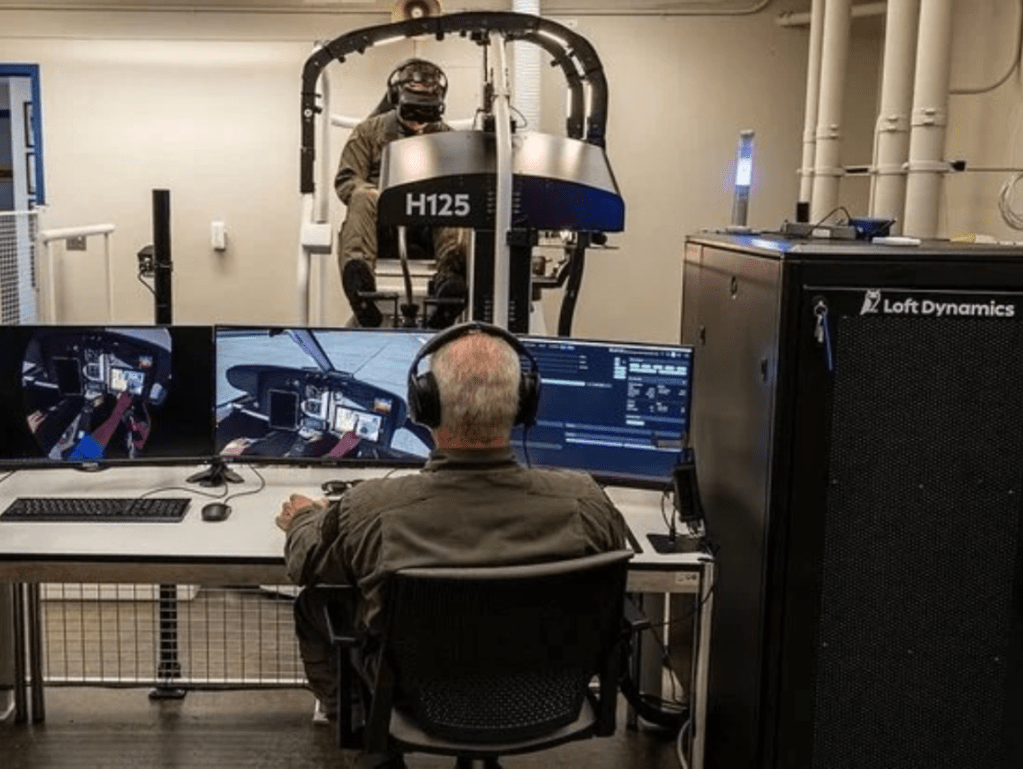
The helicopter training industry has long been dominated by six-degrees-of-freedom (6DOF) full flight simulators. While effective, these systems are costly, space-consuming, and resource-intensive. Extended reality (XR) platforms, such as those developed by Swiss-based Loft Dynamics, are emerging as viable, lower-cost alternatives capable of delivering comparable fidelity and safety outcomes.
Loft Dynamics has disrupted the simulation market by creating the world’s first FAA- and EASA-approved XR flight simulation training devices, including platforms for the Airbus H125, H145, and Robinson helicopters. Their immersive XR simulators feature full-scale cockpit replicas, 360-degree visual fields, and dynamic motion systems, yet occupy a fraction of the space and cost of traditional 6DOF models.
Organizations such as Boston MedFlight and the Los Angeles Police Department are early adopters of this emerging training technology. Boston MedFlight recently partnered on the H145 XR simulator, allowing pilots to train for complex emergency medical service missions. Similarly, Los Angeles Police Department’s aviation division uses Loft Dynamics’ systems to enhance rotorcraft pilot readiness in challenging urban environments.
As helicopter operators look to leverage recent advancements in XR technology, the demand for high-fidelity, cost-effective, and scalable training solutions continues to rise. XR training is increasingly seen as a viable alternative to traditional 6DOF simulators in the eyes of both regulators and operators.
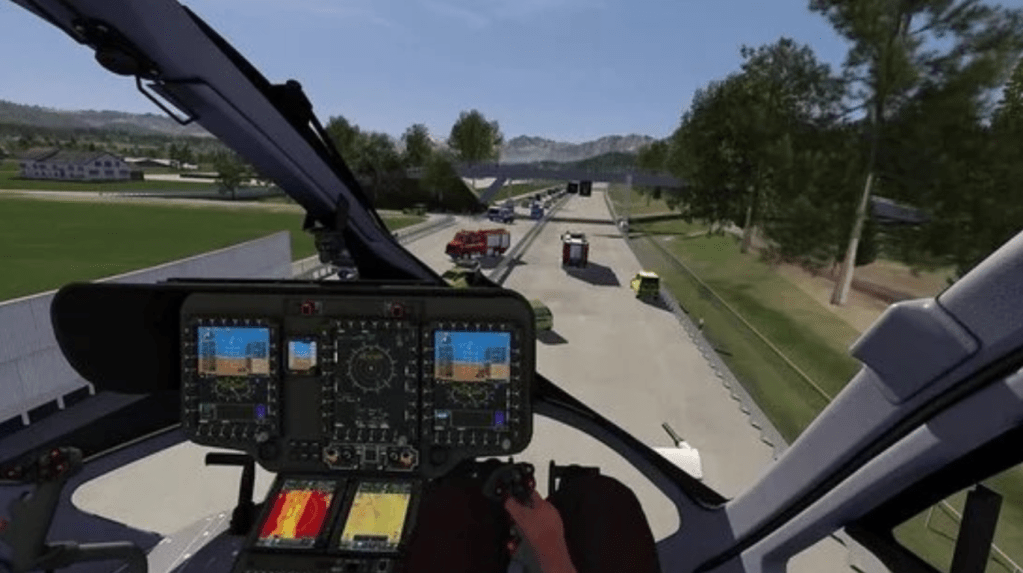
Pictures from Loft Dynamics.









 HFES Aerospace Systems
Leave a comment