
Recent publications
(New book) Transitioning to Autonomy – The Psychology of Human Supervisory Control
By Ronald McLeod
A Case for Runway Status Lights at Nontowered Airports
Human Factors
Luigi Raphael I. Dy and John H. Mott
Exploring the relationship between operator experience, propensity to trust automation and perceived system trustworthiness of uncrewed Air Vehicles
Ergonomics
Ben Grindley, Tom Cherrett, James Scanlan & Katherine L. Plant
A Review of Outcomes Reported in Aviation Peer Support Programs: What Data Exist?
Aviation Psychology and Applied Human Factors
Robert Bor, Aedrian Bekker, Sarah Gordon, Ruth Henderson, Gerhard Fahnenbruck, Quay Snyder, and William Hoffmann
Visual Illusions in Aviation: Simulating the Black Hole Phenomenon
Human Factors
Arleen Aksay, Brittney Hartle, Robert S. Allison, Elizabeth L. Irving, Sion Jennings and Laurie M. Wilcox
A Multimodal Man-Machine Hybrid Interaction Model for Future Fighter Cockpit: Design and Feasibility Verification
International Journal of Human–Computer Interaction
Jiaqi Li, Jiang Bin & Xiaoli Wu
Podcast

Elena Zhang and Philippe DP have started a regular segment as part of the Human Factors podcast to share the latest in aviation human factors. You can listen on your podcast feed or on Youtube.
Feb 20 – ATC modernization
Feb 6 – US DOT AAM roadmap
In the News
Autonomy
Autonomous aircraft ops may be limited by number of human operators, NASA research indicates. The piece reports on NASA’s MPATH initiative, short for Measuring Performance for Autonomy Teaming with Humans, that investigates the number of vehicles a human can supervise. The answer? As much of our human factors knowledge: it depends! You can read the piece and NASA papers to find out more about their results.
Advanced Air Mobility
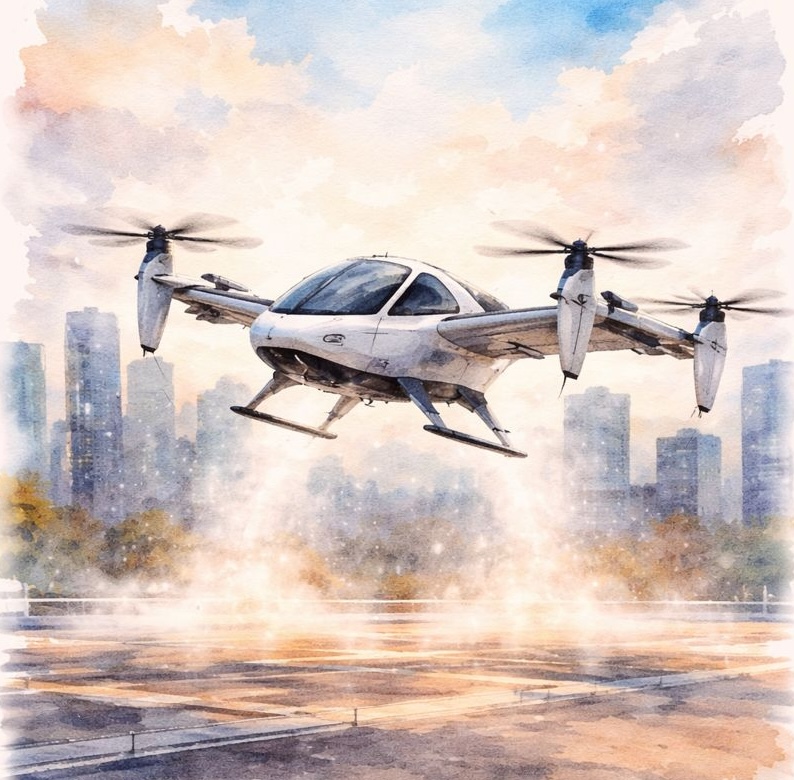
Congress Wants FAA to Simplify Electric Air Taxi Certification. A bipartisan bill introduced in the U.S. Senate and House of Representatives would require the FAA to “streamline” its type certification process for eVTOL and AAM. The main points would be for the FAA to use industry standards as an acceptable means of compliance; to estimate its response time to issue papers, including G-1s and G-2s, within 270 days of passage; to define when an issue paper is needed or not; and to create regulations for topics that are commonly addressed in issue papers or special conditions to reduce the back and forth with the applicant.
ATM
What Peraton signed up for as ATC modernization’s ‘prime integrator’. Since Peraton got the contract to manage the $12.5b U.S. ATC modernization in late 2025, many of us have been left wondering what was the scope of their mandate and what we should expect of their work. We saw some contracts being awarded (ex. ground radars last month) but still short of a larger narrative. The Air Current offers such a deep dive into Peraton’s role and explains the big picture plans for ATC modernization. Their piece is behind the paywall, but I would argue it is worth the price to have the answers we have been looking for in the past few months.
The way ahead for ATC. Aerospace America reviews the main challenges related to ATC workforce and the plan put forward by the Department of Transportation to address them: long work shifts, understaffing, high dropout rate during training and outdated technology. The writing is interesting as it relates the statistics with announcements made by the DOT and the FAA over the last year to improve training and retention.
FAA Reorganization. The new FAA reorganization differs from the previous structure mainly by centralizing safety oversight, creating a new modernization office to manage the ATC overhaul and an advanced technology office for all things UAS, eVTOL, AAM into the NAS, and consolidating internal support functions under new top-level offices. The news release made a point of noting that no jobs will be lost with the reorganization
Aviation
Safety Board Blames F.A.A. For Multiple Failures in D.C. Crash. The National Transportation Safety Board determined that the Federal Aviation Administration had approved dangerous flight routes that allowed an Army helicopter to fly into the path of a passenger jet over the Potomac River on Jan. 29, 2025, to calamitous results.
Airbus Experiments With 3D Printing Aircraft Parts. Airbus announced that it integrated 3D printed parts into the A350’s cargo door surround area. Using wire-directed energy deposition (w-DED), an energy beam melts a titanium wire that is moved around by a multi-axis robotic arm. Parts installed on the A350 were printed by a supplier, inspected by Testia, and then machined and installed in Airbus factories.
Training
Applying Human Performance in Regulatory Activities. ICAO self-paced course provides practical guidance on applying Human Performance (HP) principles within regulatory activities, in alignment with ICAO’s Manual on Human Performance for Regulators (Doc 10151). Duration: 6 hours, cost: $400.
For fun
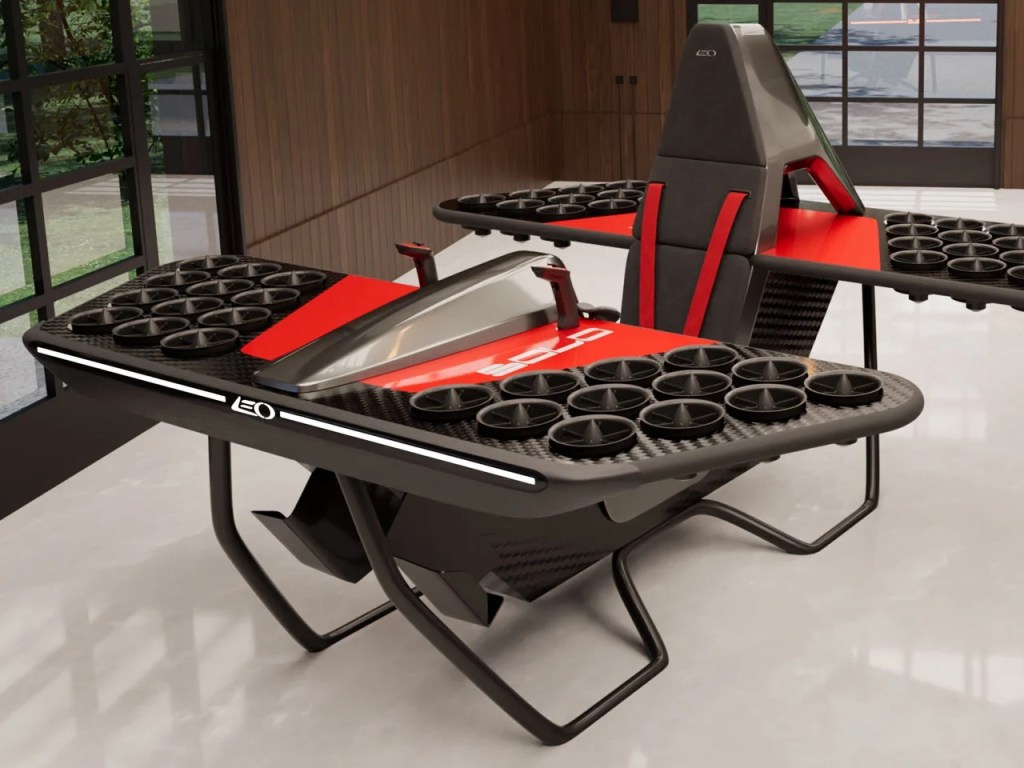
LEO JetBike wants to be your eVTOL bike. Unveiled during CES, LEO JetBike is a single seat eVTOL that does not use propellers but rather “electric microjets” spanned on the wing to provide lift and forward thrust. Its specifications says it can fly up to 15 ft., at 60 mph for a short trip of 10-15 min. And it does not require a pilot licence to fly. The device is sold at $100,00 and the company is already taking orders. First deliveries are planned for the end of 2026, in time for the holidays. It looks like a fun device to fly around your backyard, but at this price point I’ll think twice before betting on its success.
Military
GCAP 6-th gen fighter jet development cost triples. GCAP developed by Italy, UK and Japan planned entry into service in 2035. Design and development cost went from €6 billion to €18.6 billion
Space
FAA Warns ‘Catastrophic’ Spaceflight Mishaps Pose Threat to Aircraft. The piece presents a recent FAA Safety Alert for Operators (SAFO) that warns pilots to be prepared to “exercise extreme caution” when flying below the trajectory of commercial spacecraft. The article expands on the two mishaps that happened to SpaceX’s Starship rocket in 2025 and the repercussions it had on civilian airspace.
NASA seeks partners for Earth Science extended missions. NASA’s Earth Science Division is exploring partnerships with external organizations to support instruments mounted on the International Space Station and free-flyer missions.
SpaceX to Launch Free Space Situational Awareness Platform. SpaceX announced that it will provide free access to its Stargaze platform to all satellite operators later this Spring. Stargaze is a space situational awareness system that improves object detection by collecting data from nearly 30,000 star trackers. Predictions of position and velocity of all detected objects are fed into a space-traffic management platform that identifies potential close approaches between objects. Stargaze says it is able to make conjunction screening results within minutes, compared to hours from ground-based radars.




 HFES Aerospace Systems
Leave a comment